
Start ROB RUN by completing the introductory quests, visiting Lenny at the Motel, and choosing a starting activity, following the fan wiki's suggested beginner route. Before carrying valuables into a robbery, understand how your role and location affect what you can lose. The developer says balancing and features remain in development, so treat the test-build controls below as version-specific guidance.
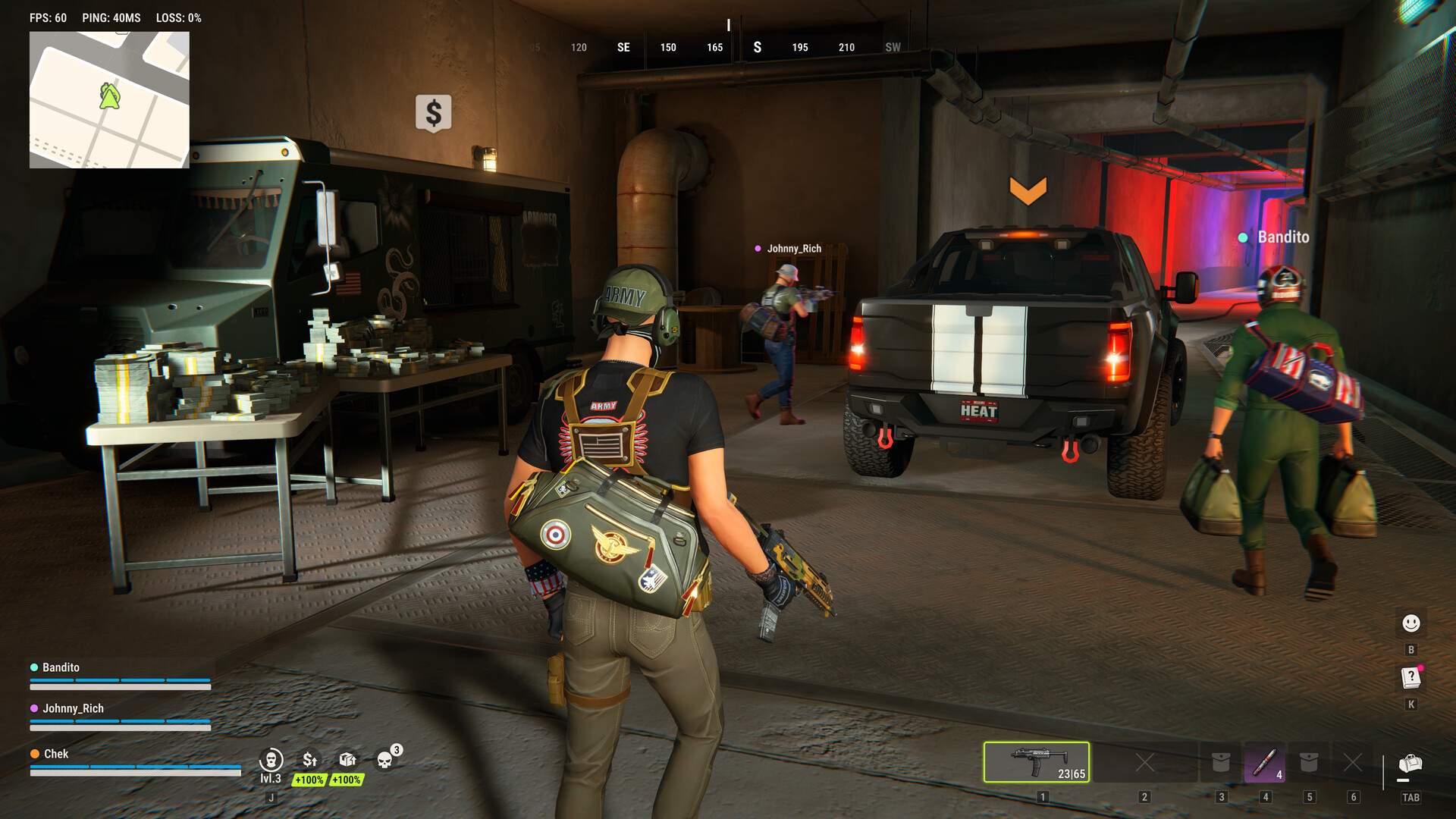
Finish the introduction and meet Lenny
The fan wiki places the introductory quests before the main sandbox activities and recommends speaking with Lenny to learn the core mechanics. A player walkthrough describes the opening hotel as a safe zone and identifies Lenny as its owner, directing newcomers toward Looty Bay. That safe-zone description belongs to the demonstrated test build; use the opening instructions in your session to orient yourself.
The official Steam description identifies both cops and criminals as human players with their own agendas. It also explicitly allows finding another approach when an open fight would be too dangerous. Treat that as permission to reconsider a confrontation, rather than assuming every encounter requires shooting, and avoid extending the player-controlled description to every shopkeeper or other person you meet.
Try a basic looting and selling trip
A beginner test-build walkthrough demonstrates searching rubbish bins to collect starting funds, using a held E key for the search interaction. The player finds cash and mentions laptops and toasters among possible finds, without establishing drop rates or a fixed return. This gives you a documented activity to try, but check your current interaction prompts before relying on the recorded control.
For selling valuables, the fan wiki identifies a fence at a dollar-sign-marked van in Looty Bay and the Sales Center. The walkthrough says selling to the fence requires becoming a criminal and demonstrates holding F to switch. It then shows a return toward the hotel through the city's road exits, a route example that does not guarantee you will avoid arrest along the way.
Separate equipment unlocks, purchases, and cash storage
Watch for a distinction between unlocking equipment and actually buying it: a test-build equipment walkthrough unlocks a sports bag before purchasing the bag itself. The same walkthrough shows Black Market categories for equipment, vehicles, and construction, with ammunition, medicine, grenades, and light protective equipment among the examples. Use those examples to recognize the shop's scope, while checking the current purchase screen for what an unlock actually provides.
The fan wiki lists city loot and Black Market purchases through Lenny or a base laptop as ways to obtain weapons. For cash, the test-build walkthrough also demonstrates a storage interaction at the hotel that accepts money only. Keep those functions separate when planning your return trip: the demonstrated cash stash is not evidence of storage for keys or every other item in your inventory.
Understand losses before choosing a role
According to the fan wiki, criminals who die in Looty Bay lose their inventory, while civilians who die in the city retain bag contents and equipped gear. That is a location-specific rule from a third-party guide, not a promise covering every part of the map. The same wiki says dying in the desert costs players all their loot regardless of role. Do not carry the city's civilian protection into your expectations for a desert trip.
Arrest and death also need separate treatment when you decide whether to keep fighting. The fan wiki describes surrender to police as a way for criminals to preserve equipped gear. A test-build walkthrough similarly says arrest keeps equipped items but costs the contents of your bag and car trunk. Neither account promises that surrender saves every category of property, so preserving equipment should not be confused with preserving the entire haul.
Prepare a robbery before starting it
The fan wiki recommends scouting a target and planning the getaway route before beginning a robbery. It describes putting on a mask as becoming a criminal and enabling robbery activities in Looty Bay. The wiki also says leaving Looty Bay clears criminal status and allows a fresh role choice on return; treat that as third-party guidance to check against your current build.
Alarm handling deserves attention: a house-robbery video begins with disabling an alarm, while another test-build walkthrough records an alarm sounding during a robbery. Both the robbery video and fan wiki describe holding occupants or staff at gunpoint to stop them calling police, which does not establish control over every alarm source. The video also suggests hiding in a closet if police arrive, without guaranteeing concealment; with teammates, the wiki recommends dividing entry, carrying, and covering duties.
Consider police work as a starting activity
The fan wiki describes joining the police at Looty Bay Police Station when an officer slot is available, followed by receiving standard equipment and a patrol vehicle. It lists fighting crime and confiscating contraband as ways to earn a police paycheck. Badge progression can unlock improved equipment, according to the same guide, but department-issued gear is lost on death while personal items and equipment are retained. Consider this an alternative activity with its own availability and loss rules, rather than treating issued equipment as permanently yours.
Learn banking and base requirements
The fan wiki describes opening a bank account at Looty Bay Bank as a civilian, laundering funds at your base, and withdrawing cash through an ATM. These are distinct banking actions, so identify the relevant service before assuming the hotel's cash storage does the same job. For establishing a base, the wiki says to find an owned settlement, locate a vacant plot, and pay rent through the sign beside it.
The official description says hideouts can be built and upgraded, with storage for loot and vehicles plus workbenches and safes. It also warns that a more lavish refuge attracts more intruders, so storage should not be understood as absolute protection. The fan wiki describes security fuses as making hacking require more time and resources, and defense modules as alerting allies during an attack, without promising an unbreachable base.
Choose your next direction and expect change
Beyond the opening route, the fan wiki lists heists, cargo hauling, base production, police work, and territory fighting as starting directions, without establishing a highest-paying choice. The official description allows solo survival and presents families or clans as ways to assign roles, organize raids, and pursue territory together. Choose an activity you want to learn before assuming that joining a group or immediately attempting a larger robbery is compulsory.
The Steam description frames progression around building up within a week and then starting over, establishing a server-wipe context without specifying everything that resets. Its Playtest listing also describes requesting access and waiting until the developer is ready for more participants, which does not confirm immediate entry or current availability. Between access conditions, wipes, and the developer's warning about ongoing changes and possible bugs, keep your expectations tied to the build you can actually enter.